July - Matariki Exhibition
Tutu Fingers Collective presents Tatty Naff
From 4th July till 8th August 2026
Opening event Saturday 4th July 2-4pm
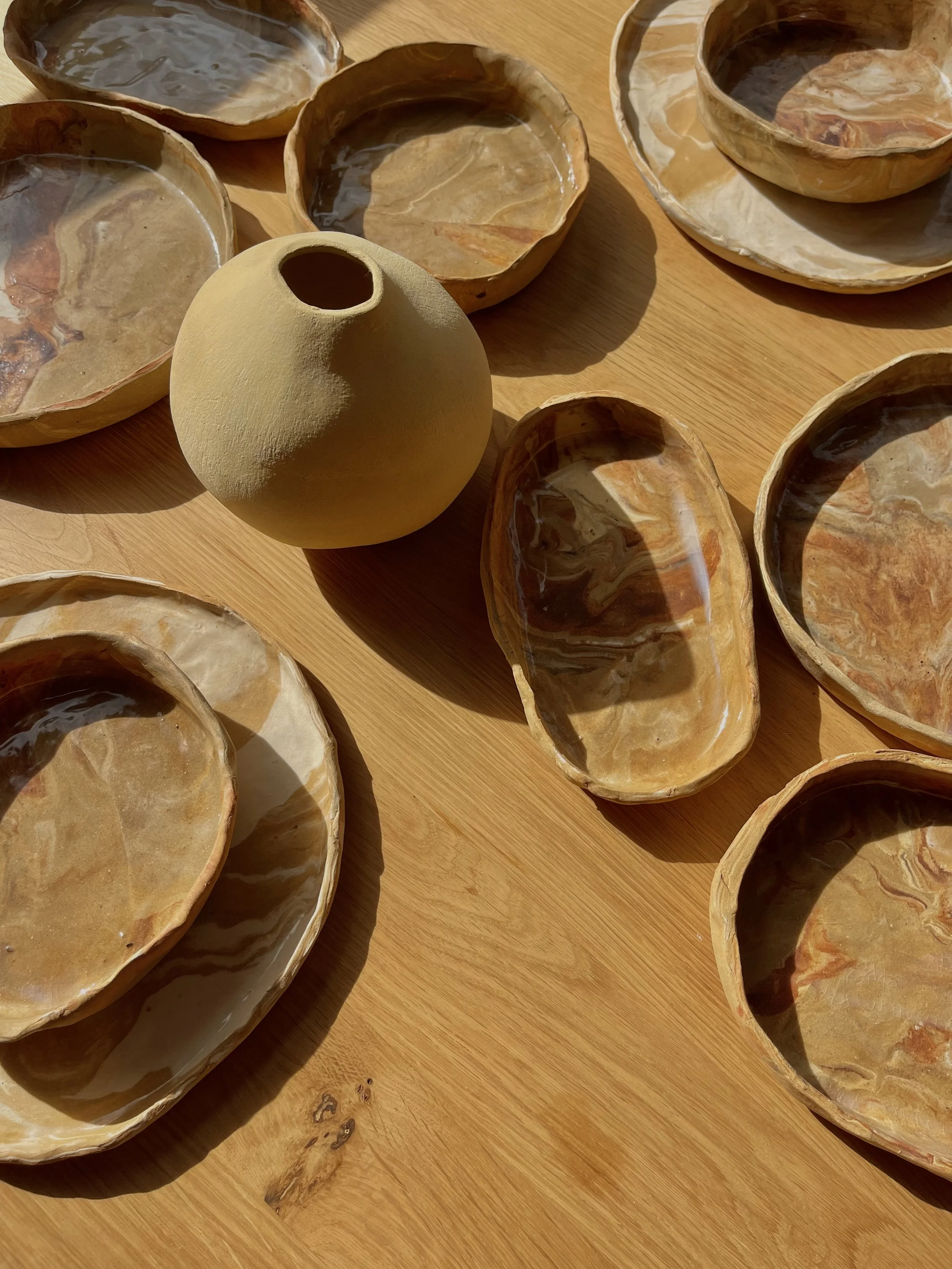
Tatty Naff, an exhibition that reimagines the gallery as a 1970s-inspired whare environment, drawing on domestic design elements of the era. The exhibition integrates Māori material practices with retro interior aesthetics to create a cohesive installation shaped around the principles of communal space, shared making, and the values associated with Matariki.
The project positions the gallery as a lived-in room rather than a formal white‑cube environment. Works reference common features of 1970s Aotearoa domestic interiors — textured fabrics, warm lighting, bamboo, bead detailing, modular seating — and combine these with Māori methods of making, including whatu, whakairo, kōhatu work, and collective construction.
Light functions as a central organising element, with each lighting work referencing the Matariki whetū through its material choices, form, and tone. The exhibition uses these light sources to structure the space and guide movement in a manner aligned with the conceptual architecture of a whare.
Context: 1970s Aotearoa & Māori Creative Practice
The exhibition examines the crossover between Māori creative practices and 1970s Aotearoa domestic aesthetics. During this period, Māori urbanisation and cultural resurgence shaped new modes of making and living. Tatty Naff places Māori material practices — whatu, kōhatu work, whakairo — into conversation with the design sensibilities of the time, highlighting how Māori makers adapted, innovated, and navigated domestic environments.
This project does not attempt to replicate the 1970s. Instead, it identifies relevant materials, textures, and design approaches from the era and reinterprets them within a contemporary Māori-led framework.
We gratefully acknowledge the Kaipātiki Local Board for its funding support, which enables us to provide accessible arts experiences and opportunities for our local community.
Tutu Fingers Collective
Tutu Fingers is a dynamic weaving collective made up of artists Arapeta Hākura, Wai Ching Chan, Kaliyah Lima, Arihi Stevenson, Yana Sanvictores and Ziggy Raven. The collective is dedicated to the revitalization and innovation of Māori-Asia Pacific weaving practices, centralizing their work around traditional materials such as harakeke (New Zealand flax) and muka (fiber extracted from flax) and other
native plants endemic to Aotearoa. They also incorporate contemporary materials and techniques, drawing inspiration from whatu kākahu (Māori cloak weaving) and rāranga (Māori basket weaving) and wider Asia Pacific weaving practices.
Tutu Fingers aims to bridge the traditional and modern worlds of Māori-Asia Pacific weaving, creating pieces that resonate with cultural heritage while embracing new artistic expressions. Their work ranges from large-scale weaving projects that command space and attention to small, intricate, and intimate installations that invite close engagement. Each piece reflects a deep connection to Māori identity, culture, and the natural world (te taiao), exploring the intricate relationships between people and their environment.
Believing in community engagement as the forefront of their weaving activations and installations, Tutu Fingers is founded on the principles of whakawhanaungatanga (building relationships), manaakitanga (hospitality), and kaitiakitanga (guardianship). Weaving is seen as a relational practice, one that connects people on multiple levels. The collective embodies this philosophy by focusing on community through workshops and wānanga (educational gatherings), which not only transfer the stories of the weavings and the techniques used but also explore how these can serve as spaces for intersectionality and critical thinking.
Tutu Fingers seeks to showcase the versatility and depth of Māori weaving, offering audiences an immersive experience of both the traditional and the contemporary.
By weaving together the threads of past and present, Tutu Fingers not only honors their ancestral practices but also pushes the boundaries of what Māori weaving can be, fostering a renewed appreciation and understanding of this rich cultural art form.
Participating Tutu Fingers Artist Biographies:
Arapeta Hākura
Arapeta is an Irāwhiti (Transgender Māori) artist, curator, and academic based in Whangateao, Tāmaki Makaurau, and Waihi Beach in Aotearoa, New Zealand. They are of Te Rarawa, Ngāti Kahu, Te Patu Koraha, Tainui, Ngāti Mahuta, Ngāti Marutūāhu, Ngāti Whanaunga, Ngai Te Rangi, Ngai Tohianga, Ngāti Whakamarurangi, Ngāti Tuirirangi, Ngāti Koata, Ngāti Te Wehi, Ngāti Whangaparāoa, Ngāti Tahinga, Ngāti Motemote, Ngāti Ruanui, Ngāti Porou, Scottish, and Croatian descent. Arapeta is a weaver of stories with particular focus on Irāwhiti transgender Māori lived experiences, using the poetics of adornment, objects, performance, sound art, photography, and cinema. Drawing upon various traditional and contemporary art forms passed down through their whakapapa, their practice challenges binaries of western and precolonial Māori gendered making as well as binaries of material
practices. Through their PhD scholarship ‘Whare Wawata: Dream Walking through takatāpui storytelling and sovereignty in transdisciplinary contemporary art,’ they ground their practice in pioneering indigenous transgender academia and theory.
Arapeta has exhibited across Aotearoa and internationally, often challenging the western imperialism of contemporary art spaces. Through their methodology of Whare Wawata—prophetic dreaming in Te Ao Māori—they actively decolonize and dream indigenous trans storytelling in space. Their exhibitions are site and kaupapa specific, focusing on site and community as primary progenitors for exhibition making. Exhibitions such as Home Sweet Home (2022, RM Gallery, Karangahape Road), Bunnies Blue Moon
(2024, Govett Brewster Gallery), and Cowboy Motel (2025, Dowse Art Museum) become sites of play,
invigoration, and liberation of identity, politics, and joy.
Alongside contemporary materialities, Arapeta specializes in Māori practices including Pao Kōwhatu (customary stone adze making), Whatu kākāhu (customary garment weaving), Tapa Māori (bark cloth practices), and Uku Whenu (customary clay making). They uphold these material practices while challenging their potentiality through contemporary materials, thought, and processes. Their research and role as a knowledge holder of Māori material art extends nationally and internationally through the academic Fine Arts and Toi Māori fields, as well as in the musicological space, often engaging with large museum institutions such as the British Museum, the Smithsonian, and Museum of New Zealand Te Papa Tongarewa.
Arapeta is currently working on multiple iwi and hapū focused projects extending these various fields. Key projects include the development of Takarunga recreational space in Devonport as a mana whenua resident artist, and recent exhibitions Rehutai (2024) and Ringa Whetū (2025) at Te Uru Waitakere Gallery and Star Booty at RM Gallery at Tāmaki Makaurau in collaboration with their weaving collective Tutu Fingers. Hākura lectures at the University of Auckland, teaching Ngā Toi Taketake: Fibre and Textiles (engaging with customary textile processes from Te Whare Tapora), Ngā Toi Taketake: Stone and Sculpture (engaging with customary stone carving processes), and Moving Image, Documentation and Action (engaging in time-based and performance art). Outside of the academic field, Hākura is a kaiako engaging with iwi and hapū restorative practices, and is nationally recognized as both a curator and artist in Aotearoa.
Arihi Stevenson
Arihi Stevenson is a ringa toi currently living and making in Tamaki Makaurau, they are of Kai tahu, Kati Mamoe, Dutch, Scottish and English descent. Her practice is driven by the desire of connection to whakapapa and is surrounded by consistent korero wānaka. This practice exists most commonly in a direct kōrero to te ao wairua as they believe in the physical and metaphysical elements of te taiao and through their art - form, manifest and nurture their atuataka.
Arihi is a multi-media practitioner with heavy focus toward painting, weaving and most recently implements of sculpture, this practice is supplemented by a love of waiata and korero and exists as continuous rangahau within this world, one ever unfolding and growing. Manaakitaka and Whakawhanaukataka are leading values for Arihi and exist equally to making, as her reach toward Kotahitaka is not one made in light steps.
Arihi is currently within the final stretch of her BFA at Elam, School of Fine Arts, University of Auckland.
Ziggy Raven
Ziggy Raven is an artist based in Whangaparāoa, Tāmaki Makaurau, Aotearoa, New Zealand. They are currently studying at Elam School of Fine Arts, University of Auckland.
Ziggy has worked as a tattoo artist for many years locally and internationally with a focus on the blasphemous, sexually explicit, queer imagery and censorship. They are drawn to people and places that exist on the fringes, dirt, sparkles, humour and ‘bad taste’.
Materiality is very important in Ziggy’s practice as they move away from the constraints of tattooing and into the freedom of other forms of art. Their process of making combines a clash of intuitive response and dabbling in science. They try to approach their work in a sensitive and where possible sustainable way and have been embracing the opportunity to work collaboratively with other artists. With a tendency to intensely deep-dive areas of interest, the Nga toi taketake: Fibre and textile course at Elam has recently thrown Ziggy into obsessively making kupenga and learning new weaving techniques sparking an even deeper love for physical making.